
Project
Construction and Procurement
Smart Procurement & Inventory Management System
Client
A private construction-sector client managing procurement, materials, suppliers, and inventory across multiple projects and locations.
Organization type
Private Client
01 / Challenge
The operational problem
Construction material management involves many connected activities, from requesting materials and approving purchases to selecting suppliers, receiving deliveries, managing stock, and tracking costs. When these activities are handled through separate spreadsheets, messages, paper records, or disconnected systems, it becomes difficult to know what has been requested, what has been approved, what has been purchased, what has arrived, and what is currently available across different projects and warehouses. The challenge was to create one system that could bring the entire construction procurement and inventory process together while giving different teams the information and controls they need for their own responsibilities.
02 / Process
How we approached the work
The workflow was organized around the different people involved, including site teams, project managers, procurement officers, storekeepers, quality teams, finance teams, administrators, and senior management.
Each stage was connected so that information recorded earlier in the process could continue through later stages without being repeatedly recreated.
The system was also designed to provide clear visibility into requests, approvals, stock movement, supplier activity, project costs, and operational history across the organization.
03 / Solution
What we built
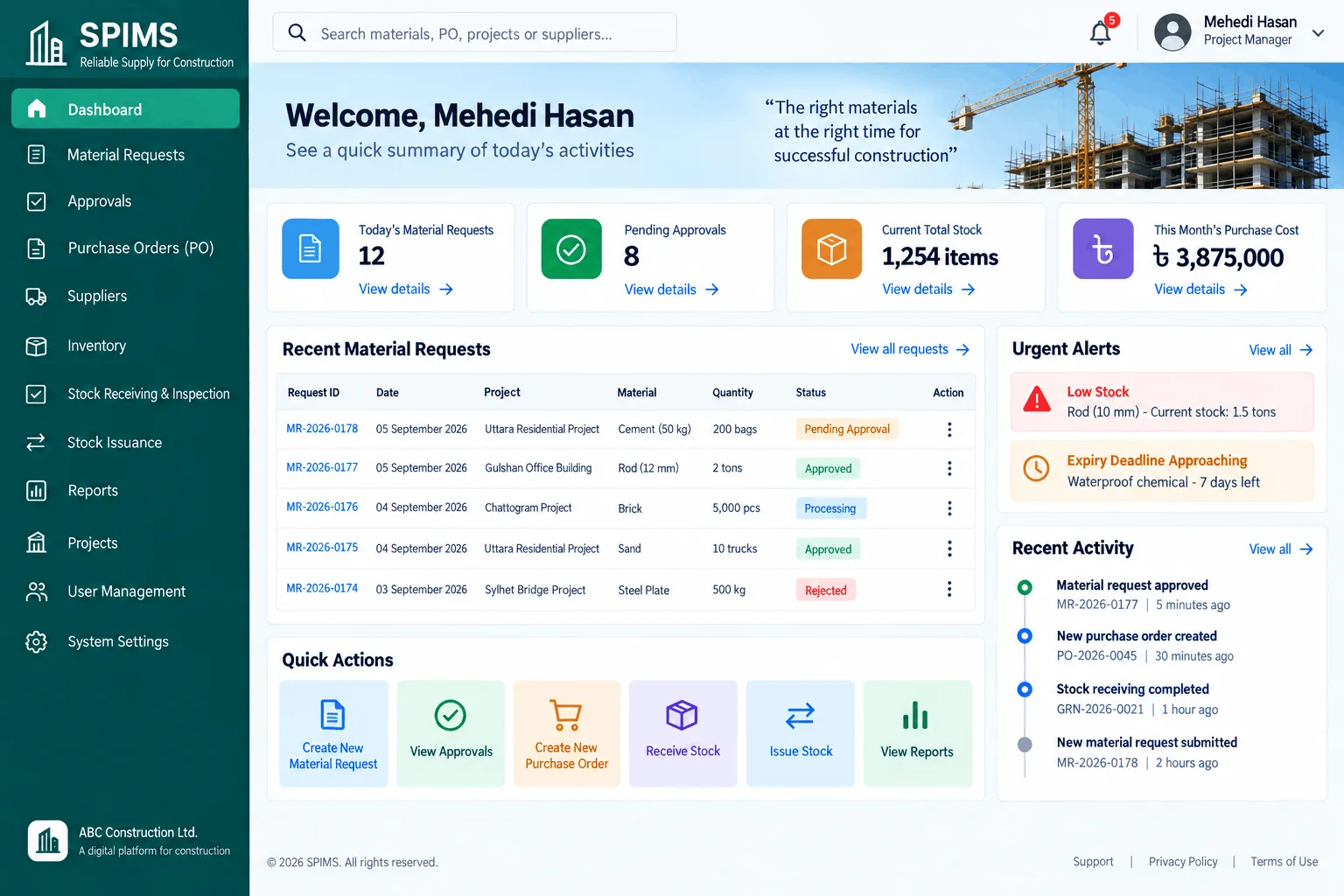
Site teams can raise material requests, managers can review and approve them, procurement teams can manage suppliers and purchase orders, and warehouse teams can receive, inspect, issue, and return materials through the same connected system.
Inventory levels are updated as materials move through the business, giving teams a clearer view of what is available across projects and storage locations.
SPIMS also supports budget oversight, supplier evaluation, purchasing records, stock alerts, operational reporting, and a complete history of important actions.
Different users receive access based on their responsibilities, allowing each team to work within the parts of the system relevant to them while management maintains wider oversight.
Technology
Technologies used
- TypeScript
- JavaScript
- Docker
- Shell
04 / Outcomes
What changed
Material requests can be followed from submission through approval, purchasing, delivery, storage, and use, giving teams greater visibility across the complete material lifecycle.
Project managers can review requests and spending, procurement teams can manage purchasing and suppliers, warehouse teams can maintain stock records, and management can view wider operational and financial information from the same system.
The platform also provides clearer records of approvals, material movements, supplier activity, and user actions, supporting stronger accountability and easier review.
The result is a more organized and transparent way to manage construction materials across multiple projects without relying on disconnected records and manual coordination.
Your operation
Have an operational problem that needs a better system?
Show us how the work happens today. We can help identify where process redesign, automation, or a dedicated operational system could make it work better.